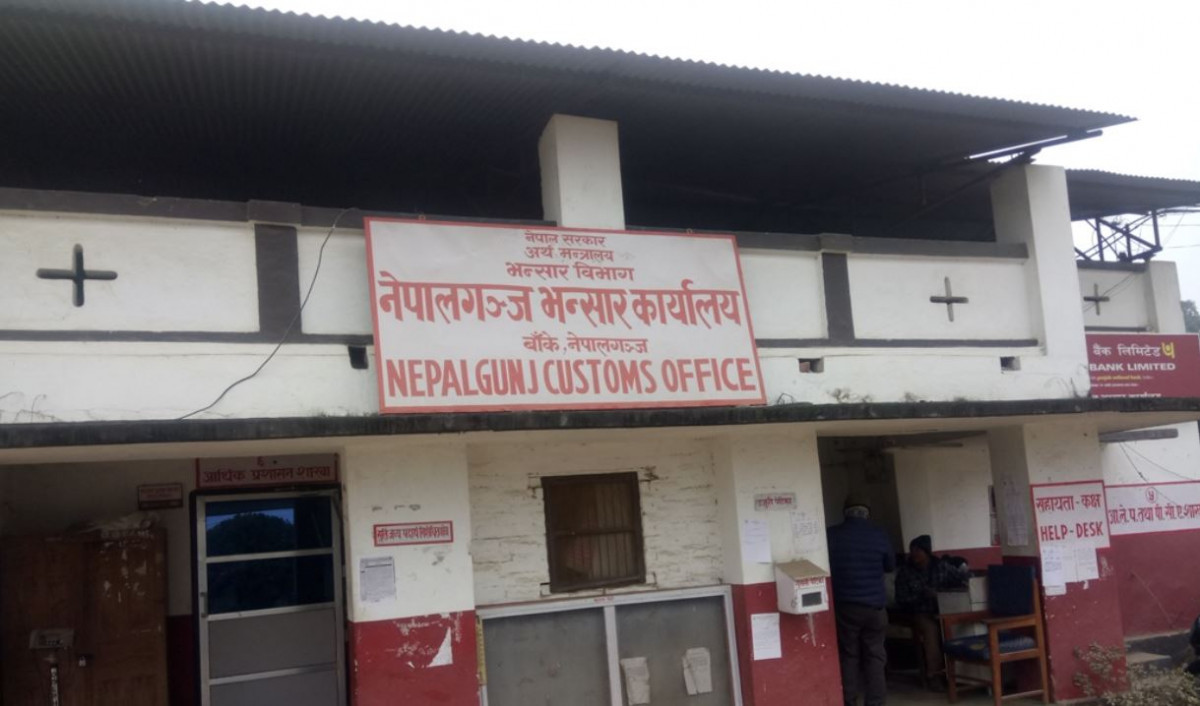



International trade and business have always been the essential factors behind sustained economic growth and its diversification in this age of globalization. Consequently, Nepal's economy has become more resilienting to internal and external shocks by engaging with global markets. Nepal implemented a liberal trade policy in 1992 and a new Trade Policy was announced in 2014. Since joining World Trade Organization (WTO) in 2004, Nepal has broadened its foreign trade relationships to many countries across the globe. The nation maintains trading relations with over one hundred countries. However, Nepal faces the problem of an increasing trade deficit at present; where imports are rising rapidly whereas export growth is minimal. Thus, it is hard for Nepal to fully exploit the potential of globalization through trade.
The government of Nepal recently held a Third Nepal Investment Summit. Which took place from April 28-29, 2024 in Kathmandu. During the summit various national and international dignitaries were present. It was organized by taking into account of national periodic plan of Nepal as well as policies and programs of the government that have high priority for private sector investments including FDI (foreign direct investment). It seeks to increase foreign investment commitments and inflows to fill resource and technology gaps for economic development in the country. Eight legal provisions related to business and investment have been amended by the government to create a conductive environment for the investment. However, during the meeting, investors were worried about procedures for safeguarding their investments as well as conflict resolution mechanisms if any disputes crop up. To make sure such inflow happens, Nepal should develop and follow proper conflict resolution mechanisms that are acceptable worldwide by investors.
Due to the differences in cultural practices, legal systems, and business expectations, disagreements may emerge within the framework of international trade and commerce. This is where mediation comes in handy as it helps in resolving conflicts by contributing to both agreed and mutually beneficial terms. It also encourages continuity of trade and maintenance of commercial relationships. Nepal holds a crucial position between India and China, which are two major markets globally and has a growing economy that is booming. Nepal can strengthen its trade ties with China, India, etc., while embracing internationally recognized norms pertaining to dispute settlement mechanisms hence opening up alternative pathways for investment as well as trade among others. Therefore, there is need for sound legal framework for dispute resolution that would give confidence to foreign investors concerning safety of their investments thereby likely increasing Foreign Direct Investment (FDI) flows into the country. Signing and ratifying the Singapore Convention on Mediation would be the best option for Nepal to move forward.
The Singapore Convention on Mediation, which is officially known as United Nations Convention on International Settlement Agreements Resulting from Mediation was adopted on December 20, 2018, and became effective on September 12, 2020 after Singapore, Fiji and Qatar ratified it. This convention works as a standardized and efficient regime for enforcing International Mediated Settlement Agreements (iMSAs) similar to arbitration under the New York Convention. Its aim is to promote mediation as a viable alternative in resolving cross-border commercial disputes. The convention fast tracks international trade by giving an express enforcement mechanism for iMSAs thereby encouraging their use in international commercial disputes. Through allowing businesses to directly enforce iMSAs promptly, Singapore Convention enhances certainty and stability to global business mediation.
The number of signatures for this convention now stands at 57 while the number of parties is 14 with major economies such as China, US, Japan, UK and India which have signed the convention as well as emerging economic hubs including Malaysia, Qatar etc. Nations that have embraced this pact have reported increased mediated settlements thereby reducing the burden on their courts and fostering a more harmonious business environment. Singapore, for instance, has emerged as a global mediation hub, attracting international disputes and enhancing its reputation as a leading center for dispute resolution. By embracing the Singapore Convention, Nepal can create a more foreseeable and trustworthy dispute resolution environment, ultimately enhancing its appeal as an investment destination.
Let us suppose, a Nepali textile manufacturer entering into an agreement with a Japanese retailer. A dispute arises on delivery terms, and both parties are keen to avoid protracted legal proceedings. Therefore, this complex case may end up being resolved through mediation facilitated under the Singapore Convention within weeks. Hence paving way for fast reaching a mutually beneficial deal between the two parties thus preserving their business relationships and cutting down on significant litigation expenditures. It is in such instances that one realizes how mediation works practically while pointing out its possible positive implications for Nepal’s commercial ties.
In mediation, disputing parties are facilitated by a neutral third-party to come up with a solution that satisfies them voluntarily. Unlike lawsuits, it is less confrontational, more adaptable and often quicker and cheaper. This happens because it saves relationship and allows solutions that targets specific interests of those involved. Mediators do not have an adjudicative power like arbitrator or Judge. They only facilitate the case and use communication skills to assist parties to come up with an agreement in all consent. Parties are free to implement the settled agreement. The core values of the mediation are impartiality, confidentiality, and self-determination.
Mediation is practiced widely in Nepal at all levels of courts and local governments. The Mediation Act was passed by the Legislature-Parliament of Nepal in 2011, and then followed by the Mediation Rule in 2014 that introduced a complete framework for mediation. The Nepalese constitution takes cognizance of the importance of alternative dispute resolution mechanisms such as mediation and arbitration so as to enhance access to justice. The Local Government Operation Act, 2017 also promotes use of mediation for dispute resolution at local level. Section 47(2) states some cases that must be mediated only using mediators. Some civil disputes and few criminal cases (permitted by the law) have been resolved by the established mediation centers showing how effective it is in maintaining social harmony within legal bounds. Meanwhile a proper mechanism capable of mediating international cases specifically commercial ones are not there. Currently, arbitration is commonly used in Nepal as an ADR method for resolving commercial disputes; however, accepting arbitration awards from international disputes poses problems due to varying statutory provisions.
By becoming a signatory to the Singapore Convention, Nepal will be able to assure foreign investors regarding effective and fair resolution of their commercial disputes. Such a guarantee could help lure foreign direct investment that might otherwise flow to other countries, and foster economic growth with the creation of jobs. Moreover, a credible dispute resolution forum also adds to Nepal's image as business-friendly country which will ultimately generate trade and economic partnership for the development of both trading nations. While signing and ratifying the Convention could be a trigger to quality improvements in its domestic mediation framework for Nepal. All of this, ultimately for the purpose of an improvement in not only international dispute resolution practices but also domestic ones - allowing all people who have been wronged to seek justice faster and easier.
Therefore, the trade and businesses are main factors for improving the all-around growth of country like Nepal. It also plays a vital role in job opportunities creation development as well is good source technology transfer Infrastructure with other nations. But conflicts are a natural thing for international trading. By adopting mediation as an alternative means of resolving conflicts, we enable low-cost and time-efficient dispute resolution process that preserves relationships for continued uninterrupted trade/commercial activity. Signing and ratifying the Singapore Convention on Mediation are indeed beneficial for Nepal, providing a golden opportunity to enhance its economic competitiveness, reinforce its legal systems as well as raising itself higher in diplomatic world. By adopting this convention, Nepal can create a conducive environment for all stakeholders (domestic and international), leading the nation towards prosperity at large. It’s a high time for Nepali policymakers, legal community, mediation council, mediation practitioners and business members to have discuss on the Singapore Convention and why Nepal should sign and ratify it. Let us work together to build a prosperous and legally harmonious future.
(Article by Advocate Deepak Raj Bhatt, Senior Program Officer at NRCTC-Nepal and Advocate Simran Napit, Section Officer at Supreme Court of Nepal)